First: rule out the medical causes
Before any behavioral work, eliminate the testable explanations. Persistent fatigue has a short list of common medical causes — iron deficiency (especially in menstruating women), B12 deficiency, vitamin D deficiency, thyroid dysfunction, sleep apnea, and depression. One physician visit and a standard panel covers most of the list.
Do this first, not last. Most people spend two years optimizing morning routines before getting the ten-minute blood test that would have answered the question. If the labs come back clean — and for most chronically tired high-functioning people, they do — the cause is in the system below.
1. Sleep quality, not quantity
"I sleep eight hours" tells you almost nothing. Sleep is an architecture — cycles of deep slow-wave sleep that restore the body and REM that restores the mind — and that architecture is easy to wreck without shortening the night at all.
The usual saboteurs: alcohol (sedation isn't sleep — it suppresses REM and fragments the second half of the night), late heavy meals, evening screens and stress (elevated arousal cuts deep sleep), an irregular schedule (the body can't optimize a rhythm it can't predict), and untreated apnea (suspect it if you snore and wake unrefreshed regardless of duration).
The test: if you regularly spend 7.5–8 hours in bed and wake feeling like you've been robbed, stop chasing more hours. Fix the architecture — consistent times, no alcohol within three hours of bed, dark cool room, screens out of the last 45 minutes.
2. Circadian misalignment
Your body runs on an internal clock that times everything — hormone release, body temperature, digestion, alertness. When your behavior and your clock disagree, you get the signature pattern: dragging all day, mysteriously awake at midnight.
That second wind at 11 p.m. isn't energy. It's a delayed rhythm: late-night light pushes melatonin back, sleeping in pushes the clock further, and within weeks you're living in the wrong time zone without leaving home.
The counterintuitive fix: the rhythm is reset in the morning, not at night. A consistent wake time — even after a bad night — plus five to ten minutes of outdoor light within the first hour anchors the clock harder than any evening routine. Evenings follow mornings, not the other way around.
3. A stress system that never powers down
A nervous system held in low-grade activation all day — vigilant, braced, "on" — is metabolically expensive. Mobilized muscles, elevated heart rate, stress hormones in circulation: it burns energy the way a car burns fuel idling at high RPM, even when you never leave your desk.
The tell is the paradox: tired but wired. Exhausted all day, then unable to switch off at night — because the system that was never allowed to power down doesn't know how anymore. If that's your pattern, the energy problem is a regulation problem, and we've written the full guide: nervous system regulation. The cortisol mechanics behind it are covered in how to lower cortisol.
The deepest fatigue isn't from doing too much. It's from never fully switching off — recovery that never reaches zero.
4. Blood sugar rollercoasters
The pattern is familiar enough to set a watch by: fine in the morning, lunch, then the 2:30 p.m. crash. High-glycemic meals spike glucose; insulin overshoots; the dip below baseline reads as exhaustion, brain fog, and a craving for the next quick carb — which restarts the ride.
The fix isn't a named diet. It's structure: protein and fat with every meal, especially breakfast (a pastry-and-coffee morning is a pre-ordered afternoon crash), fiber before fast carbs, and not white-knuckling long fasted stretches through a high-stress day — low blood sugar is itself a stress trigger.
5. Overstimulation fatigue
Here's the modern one. Your attention has been processing input every waking moment — feeds, notifications, podcasts on walks, episodes over dinner. The brain consolidates, files, and recovers during low-input states, and modern life has deleted nearly all of them.
The result is a fatigue that sleep doesn't fix, because it isn't a sleep debt — it's a stimulation debt. The tell: you feel too tired to do anything except scroll, and scrolling makes you more tired. The high-stimulation input that drains you is also downregulating your reward system, flattening motivation along with energy — the mechanism we unpacked in the dopamine piece.
The fix costs nothing: reintroduce genuine low-input time. Walks without audio. Meals without screens. Ten minutes of staring out a window like it's 1995. It feels like boredom for the first few days; it's actually your brain finally getting to file the backlog.
6. Under-recovery
Both ends of the movement spectrum produce fatigue. Train hard on poor sleep and chronic stress, and the workouts stop being deposits and become withdrawals — persistent heaviness, declining performance, elevated resting heart rate. But the far more common version is the opposite: too little movement. A sedentary body downregulates — mitochondria, circulation, energy production all adapt to the demand they're given, which is none. Tiredness from deconditioning feels identical to tiredness from overwork, and the cure is the thing you least feel like doing: regular moderate movement. Two weeks of daily walks reliably outperforms two weeks of extra rest.
7. Decision and emotional load
Every decision, context switch, and suppressed emotion draws from the same limited cognitive-control budget. A day of two hundred small decisions, forty task-switches, and three difficult conversations is genuinely exhausting at zero physical cost — and the invisible version is heavier: the unresolved conflict, the postponed decision, the career question you keep not answering. Open loops consume background processing all day.
Notice if your fatigue spikes around specific people, projects, or avoided decisions rather than specific hours. That pattern isn't biological — it's informational. The fix is closing loops: decide, delegate, have the conversation, or consciously shelve it with a date. (Founders: this is half of why you're exhausted — the other half is in the founder bottleneck piece.)
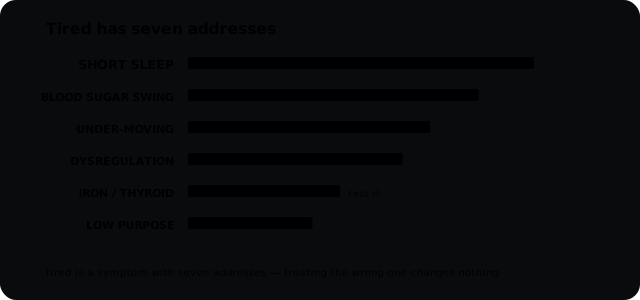
Stop asking "why am I tired?" and start asking "which tired am I?" Sleep-deprived, rhythm-shifted, stress-burned, sugar-crashed, overstimulated, deconditioned, or decision-loaded — each has a different fix, and caffeine treats none of them.
The 14-day energy rebuild
- Book the blood panel — iron, B12, vitamin D, thyroid. Eliminate the medical layer first.
- Fix the wake time. Same time every day, weekends included. This single anchor starts correcting rhythm, sleep quality, and evening cortisol at once.
- Morning light before screens. Five to ten minutes outside, phone stays in the pocket.
- Protein at breakfast. Kill the 2:30 crash at 8 a.m.
- One low-input block daily. Twenty minutes minimum — walk without audio, sit without input. Non-negotiable, and the one people skip.
- Move every day, moderately. Thirty minutes of walking beats heroic workouts on an empty tank.
- Alcohol off for the full 14 days. Not forever — just long enough to see what your sleep actually is.
- Close three loops. Pick the three open decisions or conversations draining background power. Decide, schedule, or shelve with a date.
Most people feel a distinct shift between days 7 and 10 — usually described not as more energy but as "the fog lifting." That's the signal you've found your layer. Keep pulling that thread.
Fatigue is the output. The system is the input.
Find out which layer is actually draining you — sleep, stress, stimulation, or load. Seven questions, about a minute.
Take the Free Assessment →Frequently asked questions
Why am I tired even after 8 hours of sleep?
Eight hours in bed isn't eight hours of restorative sleep. Alcohol, evening screens, irregular schedules, stress, and apnea fragment sleep architecture — cutting deep and REM sleep at full duration. Waking unrefreshed despite adequate hours points to quality, rhythm, or stress, not insufficient time in bed.
What deficiencies cause constant tiredness?
Iron, B12, and vitamin D deficiencies plus thyroid dysfunction are the common testable causes — one blood panel covers them. With normal labs, the cause is almost always behavioral: fragmented sleep, circadian misalignment, stress load, blood sugar swings, or overstimulation.
Why do I feel tired all day but awake at night?
That's a shifted circadian rhythm plus elevated evening stress hormones. Late light delays melatonin; sleeping in shifts the clock further. The fix is morning-side: consistent wake time and outdoor light within the first hour.
Can mental fatigue happen without physical activity?
Yes. Decisions, context-switching, and constant stimulation deplete cognitive control resources — genuine exhaustion at zero exertion. It isn't fixed by scrolling (more input); it's fixed by genuine low-input rest the brain can consolidate in.