The 21:40 kitchen visit, decoded
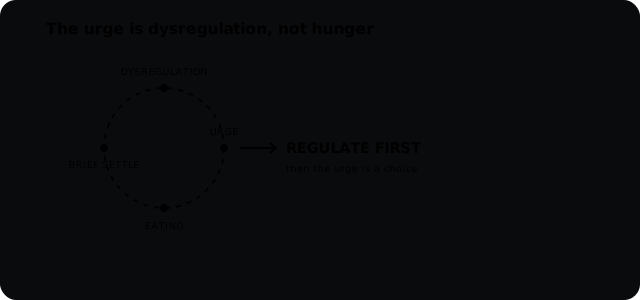
Run the tape honestly. Dinner was two hours ago; the body has fuel. Then the day's residue lands — the unanswered message, the meeting replaying, the general too-muchness — and you're standing in the kitchen light, not choosing food so much as being chosen by it: something specific, soft or crunchy or sweet, eaten quickly, half-watched over a screen. Eleven minutes later the edge is genuinely off. Forty minutes later there's fog, a faint shame, and the question that never gets a real answer: why do I keep doing this?
Here's the answer a decade of sitting with this pattern produced, and it changes the whole repair: because it works. Not as nutrition — as regulation. Eating changes state: it's soothing, it's stimulating, it's something-to-do with restless hands and an unquiet mind, and comfort food in particular takes a measurable edge off stress chemistry. You haven't been failing at discipline. You've been succeeding at self-regulation — with the only tool the kit contained, at an interest rate nobody disclosed.
The loop: why it works (briefly) and holds (for years)
Three mechanisms weld it together:
- The chemistry is real. Stress elevates cortisol, and cortisol specifically drives appetite toward energy-dense food — the body stockpiling for a famine that's actually an inbox. And the comfort food completes the circuit: palatable food acutely dampens the stress-response system (researchers have measured the blunting), which means the relief isn't placebo. It's pharmacology you can buy in the biscuit aisle. (This is half of why diets keep failing — they fight an appetite that stress keeps refilling.)
- The conditioning is automatic. Every stress→eat→relief cycle is a training rep — the same cue-behavior-reward machinery as every habit — until the feeling routes to the kitchen below conscious participation. By year five, you're not deciding. You're executing.
- The displacement is structural. If eating is your only reliable downshift, then every unmet need — rest you didn't take, comfort you didn't ask for, stimulation the flat evening didn't provide, connection the busy week didn't include — funnels through the one channel that's open at 21:40 and never says no. The fridge isn't the problem. It's the monopoly.
Emotional eating works for eleven minutes. That's not the flaw in the system — that's the system. Nothing that failed completely would ever have lasted this long.
The five tells: hunger vs. state
The repair starts with detection — reading the signal before obeying it. Five reliable tells:
- Onset. Body hunger builds over an hour; state hunger arrives in minutes, usually with a traceable trigger (check what happened just before the craving — there's almost always a just-before).
- Specificity. Body hunger negotiates — eggs, leftovers, an apple, fine. State hunger has a target. Nobody was ever emotionally hungry for lentils.
- Location. Body hunger reports from the stomach and energy level. State hunger lives in the head — a craving, a pull, a thought with gravity.
- Urgency. Body hunger can wait twenty minutes without drama. State hunger says now, because its actual job is interrupting a feeling that's arriving.
- Aftermath. Body hunger ends in satisfaction and a clean stop. State eating ends in fog, vague shame, and "why did I do that" — the signature of a need that food was never going to meet, unmet, plus calories.
Two or more tells: it's state. Which is not a verdict — it's a diagnosis, and diagnoses come with treatments.
The repair: function first, food last
- Install the pause. Ten minutes between urge and kitchen, with one honest question: what am I actually feeling right now? Tired, wound-up, lonely, bored, sad — name it specifically (labeling measurably lowers the charge). Real hunger survives ten minutes effortlessly. State urges often dissolve inside them — and when they don't, you at least eat knowing, which over months quietly changes everything.
- Stock competing downshifts. The craving was for state-change, and state-change has many doors: the ten-minute brisk walk (mobilization spent as designed), the long-exhale pattern, the genuinely hot shower, music that matches-then-lowers the mood, texting an actual human. None feels as instantly complete as eating at first — the loop has a decade's training advantage — but each rep transfers credit to the new channel.
- Fix the upstream drivers. The pattern's real fuel is usually a chronically loaded system: sleep debt (which raises hunger hormones and lowers control in the same move), a stress system that never stands down, days with no rest in them anywhere. Repair those and the 21:40 pull weakens without ever being fought directly — the least dramatic and most reliable fix in this entire field.
- Do not restrict while repairing. The instinct — clean out the cupboard, ban the foods, repent — adds restriction-rebound psychology to an already-loaded loop and reliably produces the binge it was meant to prevent. Eat enough, in daylight, without moral categories. The goal is a regulated person who sometimes eats chocolate, not a white-knuckled person who never does.
- Keep the compassion mechanical. Shame after a kitchen visit is fuel for the next one — distress is the trigger, and self-attack is distress. "That was regulation; the system needs better tools" is not softness. It's cutting the fuel line, same as everywhere else this loop appears.
Stop asking "how do I stop eating like this?" and ask "what is this eating doing for me — and what else could do that job?" The first question starts a fight with a strategy that works. The second one staffs the kit the kitchen has been covering for, alone, for years.
The night shift
Night eating deserves its own line because every driver converges after 21:00: prefrontal control at its daily low, the day's stress still circulating with no outlet, the first unstructured hour letting suppressed feelings surface, sleep pressure misread as appetite — and, if the day's eating was virtuous-but-inadequate, real hunger arriving in costume. The fixes are mostly upstream of the kitchen: eat properly in daylight (under-eating until evening is the binge's quiet sponsor), build a wind-down that actually processes the day (three lines on paper beats an hour of grazing), and move the bedtime earlier — a startling share of "night eating" is a tired person foraging for the energy to stay awake past their own need for sleep.
When it's more than a pattern
The honest clinical line: if episodes involve loss of control, large amounts, marked distress, or compensating afterwards — or if the pattern dominates your relationship with food — that's binge-eating territory, it's common, it's treatable, and it deserves a qualified professional rather than a protocol article. Everything above remains true alongside that care. Nothing above replaces it. Asking for help with an eating pattern is a systems decision, and it's the strong move, not the failed one.
Find out what's actually driving the kitchen visits.
Seven questions, about a minute. See whether your pattern runs on stress, sleep, or system — and which repair comes first.
Take the Free Assessment →Frequently asked questions
What causes emotional eating?
Cortisol-driven appetite for comfort food (which measurably dampens stress — the relief is real), conditioning from every stress→eat→relief rep, and displacement: when eating is the only downshift tool, every unmet need routes through it.
How can I tell emotional hunger from real hunger?
Five tells: sudden onset, specific craving, lives in the head, demands now, ends in regret. Body hunger builds slowly, negotiates on food, waits twenty minutes, and ends in satisfaction. Two or more tells = state.
How do I stop eating my feelings?
Replace the function first: a ten-minute pause with honest naming, competing downshifts (walk, exhale, shower, people), upstream repair of sleep and stress — and no restriction during repair, which only adds rebound to the loop.
Why do I binge at night specifically?
Night converges everything: lowest willpower, accumulated stress, first unstructured hour, sleep pressure in costume, and daytime under-eating arriving as real hunger. Eat adequately in daylight, build a wind-down, go to bed earlier.